IA
About
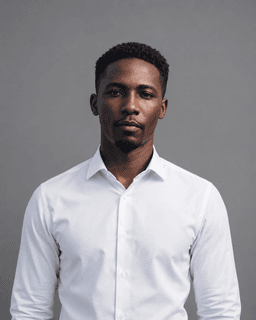
I'm Idris Agboola.
Software engineer based in Lagos, Nigeria. I came to code through an unusual route - six years in fashion, a degree in electronic engineering, and a college research project that changed everything. Today I build across web, mobile, and AI integration. Five years in, the problems I want to solve keep getting more interesting.
My Journey
01
It didn't start with code
Before I ever wrote a line of code, I spent over six years in fashion - designing garments, teaching construction techniques, and working as a facilitator at Yaba College of Technology's skill acquisition centre. Before that, I studied Electronic Engineering and interned at Nigeria Railway Corporation working on circuit design. A college research project on how the internet works quietly changed everything. I didn't plan a pivot; one curiosity just led to another until software became the thing I couldn't stop thinking about.
02
What engineering gave me
Spending time with circuits and systems before touching software meant I came into programming with a different mental model - one where understanding what's happening underneath actually matters. I'm comfortable thinking about how things connect, where things break, and why abstractions exist in the first place. That foundation shows up in how I approach architecture decisions, debug hard problems, and read documentation. It's a slower path, but it built something that's hard to fake.
03
Where I am now
I build across the full product surface - web with React, Next.js, and TypeScript; mobile with React Native and Expo; backend with Node.js, NestJS, and PostgreSQL; and increasingly with AI integration using OpenAI and LangChain. I've worked at Ritemate Technology, Oneworq, Invoke Creation, SokoSQ, and currently Tilka, where I've shipped everything from inventory systems to EUDR compliance tools with farm mapping and supply chain tracking. Five-plus years in, I'm based in Lagos and open to roles anywhere in the world. What draws me most right now is building at the intersection of AI integration and real products - where the engineering decisions determine what's actually possible.
What I Consume
01
Rob Dial
The Mindset Mentor podcast is something I return to for the mental side of consistent work - how to handle pressure, maintain focus over long stretches, and recover well when things go wrong. It's practical in ways most technical content isn't. Engineering is as much about how you show up as what you know, and I'd rather be honest about that than pretend the work is purely rational.
02
Robin Sharma
I've read The 5 AM Club and The Monk Who Sold His Ferrari. What I take from Sharma isn't a morning routine - it's the underlying argument that serious work requires designing your life around it deliberately, not just your calendar. That framing sticks when the work actually matters to you.
03
AI research and what it's actually changing
Lately a significant part of my learning time goes into AI - reading research papers, following model releases, and understanding what's actually happening beneath the surface of the tools everyone is suddenly using. I'm not interested in the hype cycle; I'm interested in what these systems can and can't do, where they're heading, and how they change the way software gets built. It's the most consequential shift I've seen in this industry, and I'd rather understand it deeply than just consume it as a user.
Beyond the Screen
01
Movement as a non-negotiable
I take an evening walk every day - at least 30 minutes - and work out with neighbours on Tuesday, Thursday, and Saturday. It's not a fitness trend; it's just how I'm wired. Growing up, I walked long distances daily, and that rhythm never left me. Staying physically active keeps my thinking cleaner and my stress manageable, and there's something about a consistent physical routine that quietly reinforces every other kind of discipline in your life.
02
Understanding money seriously
Personal finance is something I research and think about with the same rigour I bring to technical problems. Building real financial stability while working in Nigeria means thinking carefully about inflation, currency risk, and long-term decisions - it's not something you can afford to treat as an afterthought. I research it, make deliberate choices, and revisit those choices the same way I'd revisit a technical architecture.
03
Fashion and interface thinking
Fashion never really left me. I still follow it closely, and I think the years I spent in it shaped how I approach UI and UX in ways I didn't fully appreciate until later. Good garment construction and good interface design share the same underlying logic: every decision is visible to the person wearing or using it, proportion and rhythm matter, and the difference between something that feels right and something that just technically works is always in the details. When I look at a screen, I'm often thinking the same way I once thought about a pattern.